“Proving I’m Lovable is Proving to be a Preposterous Approach”


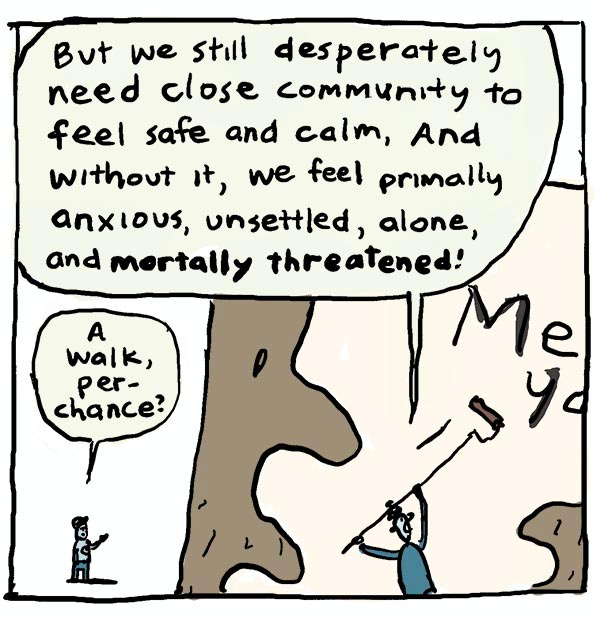

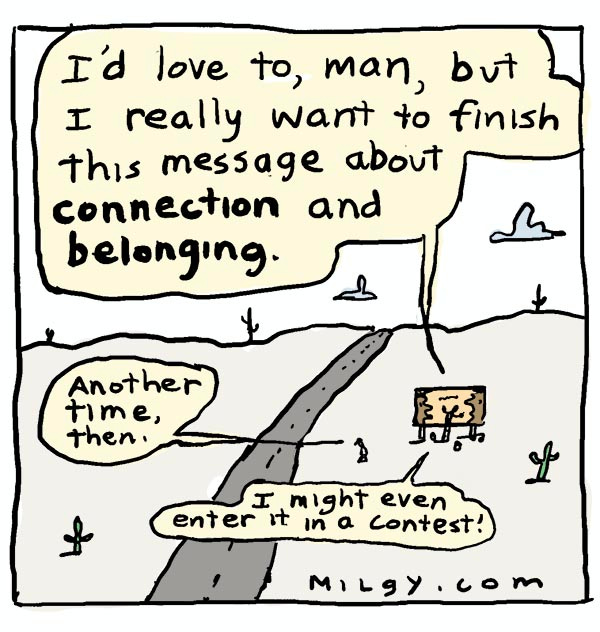
My search to feel okay led me, of course, to my childhood. But it also led me back to my parents’ childhoods, and their parents’, and quickly all the way back to the dawn of humanity. Through that evolutionary lens, it became clear that our sprawling, modern populations have made it very challenging to find the kind of secure community our prehistoric ancestors came by naturally (or they didn’t survive long enough to be our ancestors).
To create humanity, natural selection cranked up the need to belong to 11. This is why it feels so good to connect and so awful to be left out, ignored, abandoned, publicly humiliated, chastised, and otherwise ostracized.
Feeling respected, appreciated, and sought are how we know when we have found sufficient social security. But this must come from the people we personally count on. We need to know that the people we need also genuinely need us. Status, position, wealth, followers, and fame can’t satisfy this need to belong. It’s why too much is still never enough. Status and belonging are two wholly different, non-swappable drives.
I have operated most of my life on the idea that my work would, one day, make me feel liked and exquisitely included. But it never has. I fruitlessly cranked my career to prove I’m lovable, instead of hanging out with people who loved me. It sounds silly now, but it took a long time to hear the insanity.
Work still matters because work is service, and service is an important drive itself, albeit no longer automatically coupled with belonging as it was until relatively recently. Still, we need to know that we are doing good for the world and improving others’ lives. That’s the pact of humanity. If we don’t do our share, we feel bad. There is grand purpose in work. Just not belonging.
Status turns out to be of minor consequence, often making life harder instead of more fun. Humans can live fine without high status, but never without belonging.
I am finally beginning to build community and find balance with work. It’s feeling good and even natural, dare I say. Freed from the pressure of trying to satisfy needs it cannot meet, work is an increasingly pleasant activity that fills my days with purpose and focus. It turns out that relating to my needs as they are, and not as I mistakenly assume, works better. Go figure.
“Have We Become SO Individualized That Loneliness Has Become Our Natural State?”
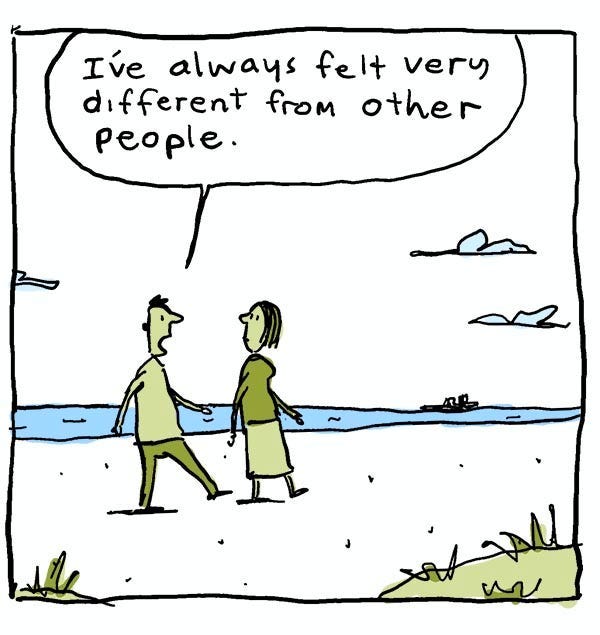
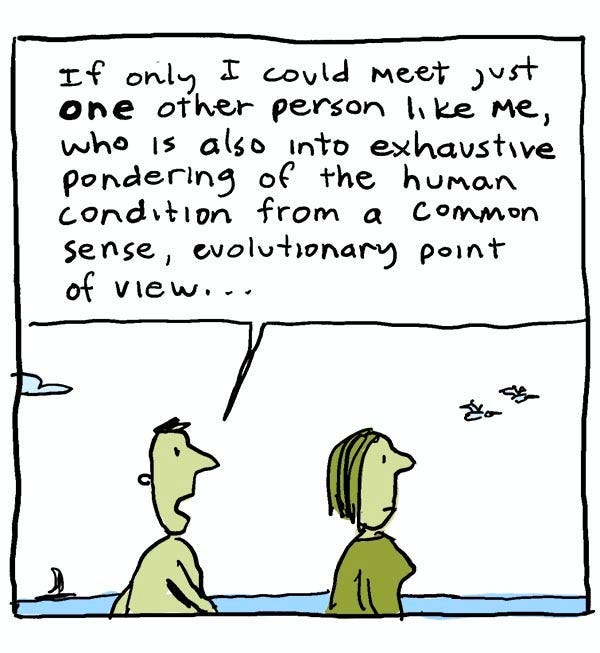
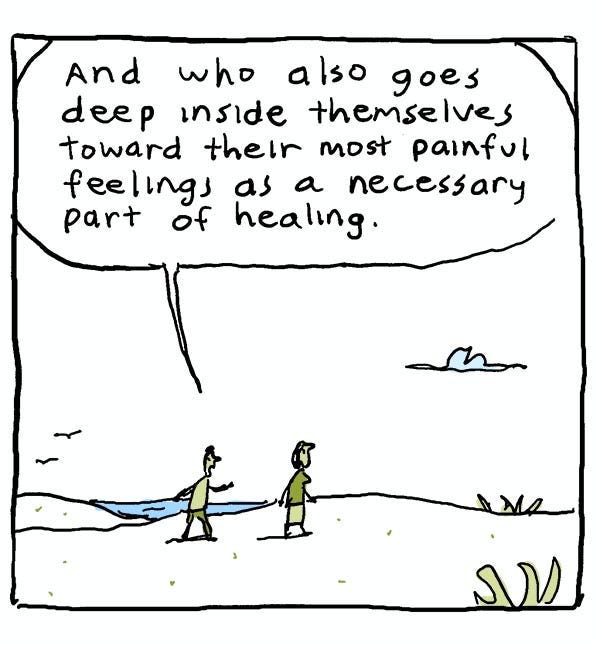
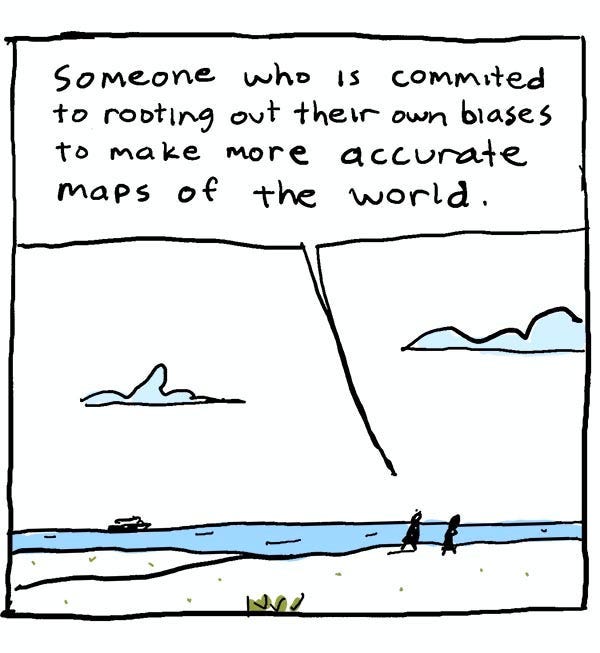
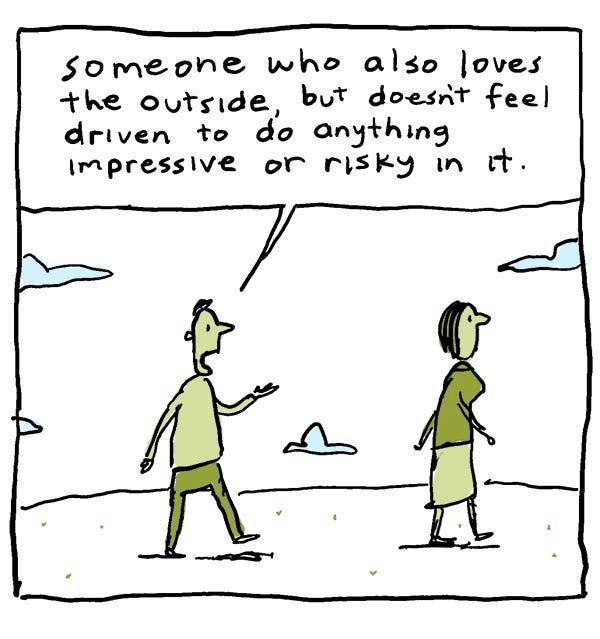
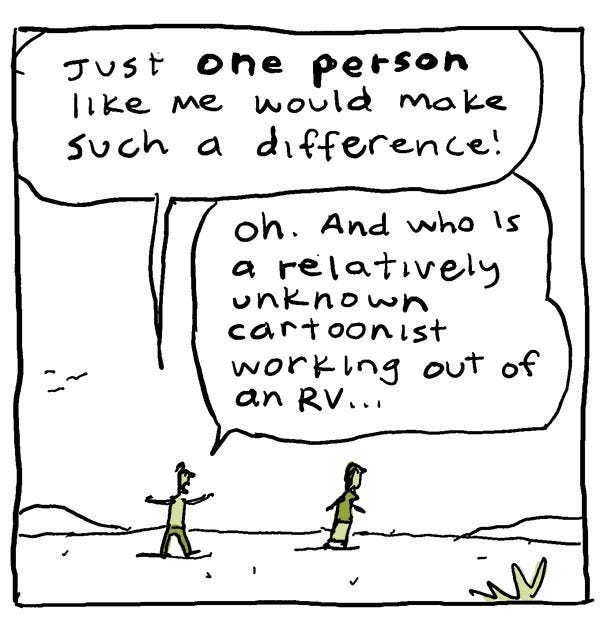
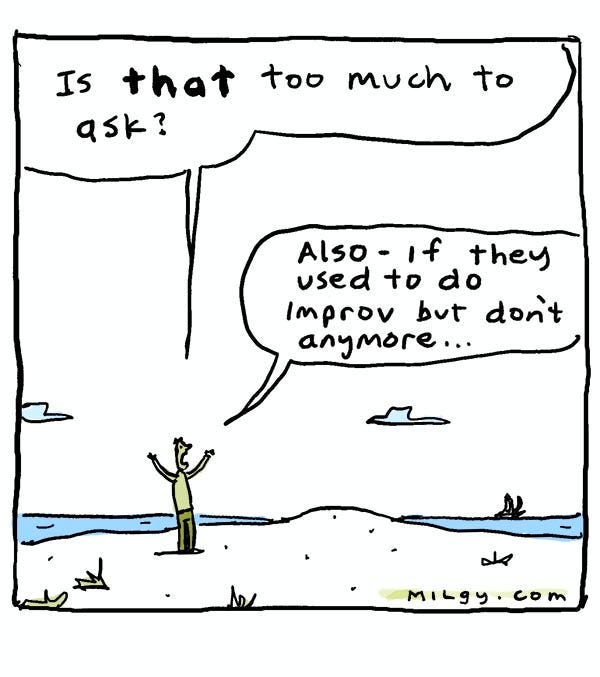
I‘ve never known what connection is. I think it’s something else besides shared interests, but there does seem to be something fundamental about that kind of overlap. This may be just another granfalloon, but it’s what I keep looking for. And wondering if it’s even possible in our overwhelmingly individualized modern world.
Nevertheless, I suspect that connection is not about interests but instead comes from simply delighting in other people who likewise delight in me. Or maybe it’s just a sort of pact to have each other’s backs. I’m not sure. But I hope to find out, if for no other reason than to stop wasting time fruitlessly guessing.
That, and to satisfy what is likely my most painfully nagging evolutionary need.
“Looking for Happiness Is Not the Way to Find It”
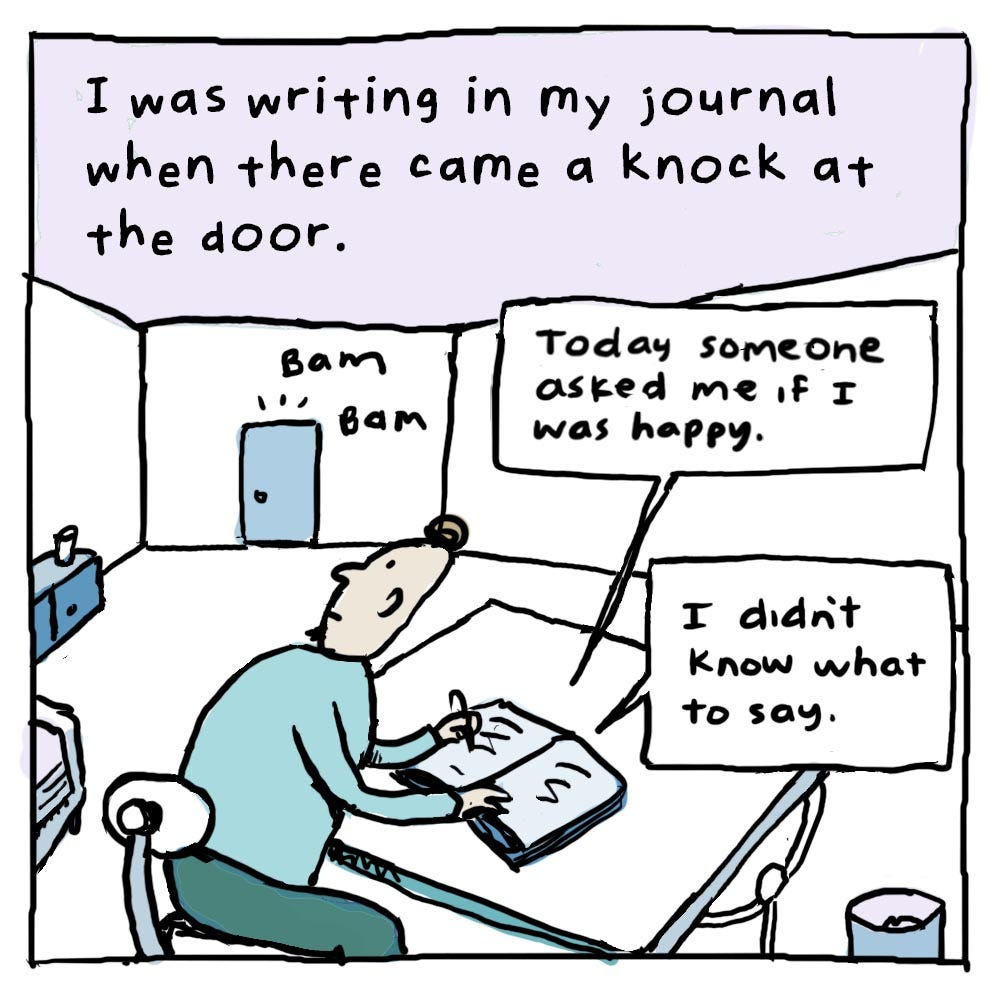

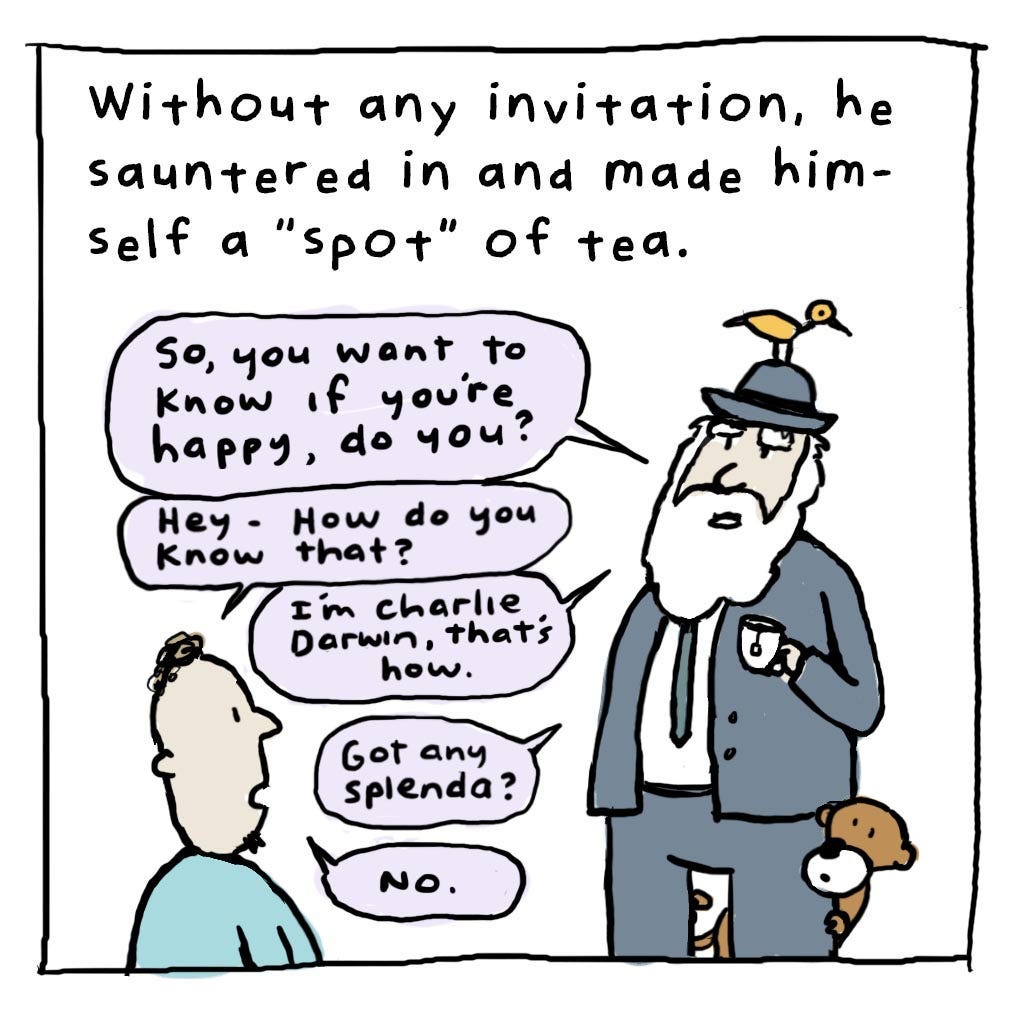
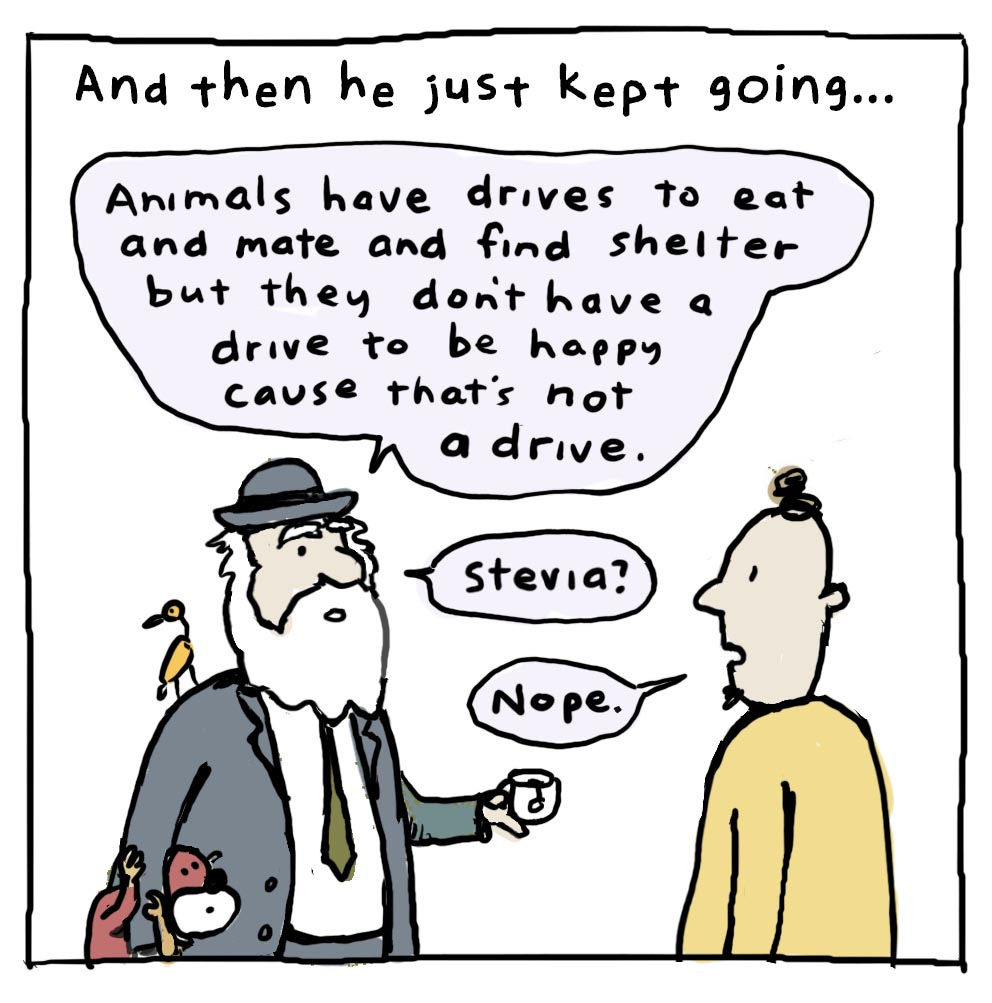
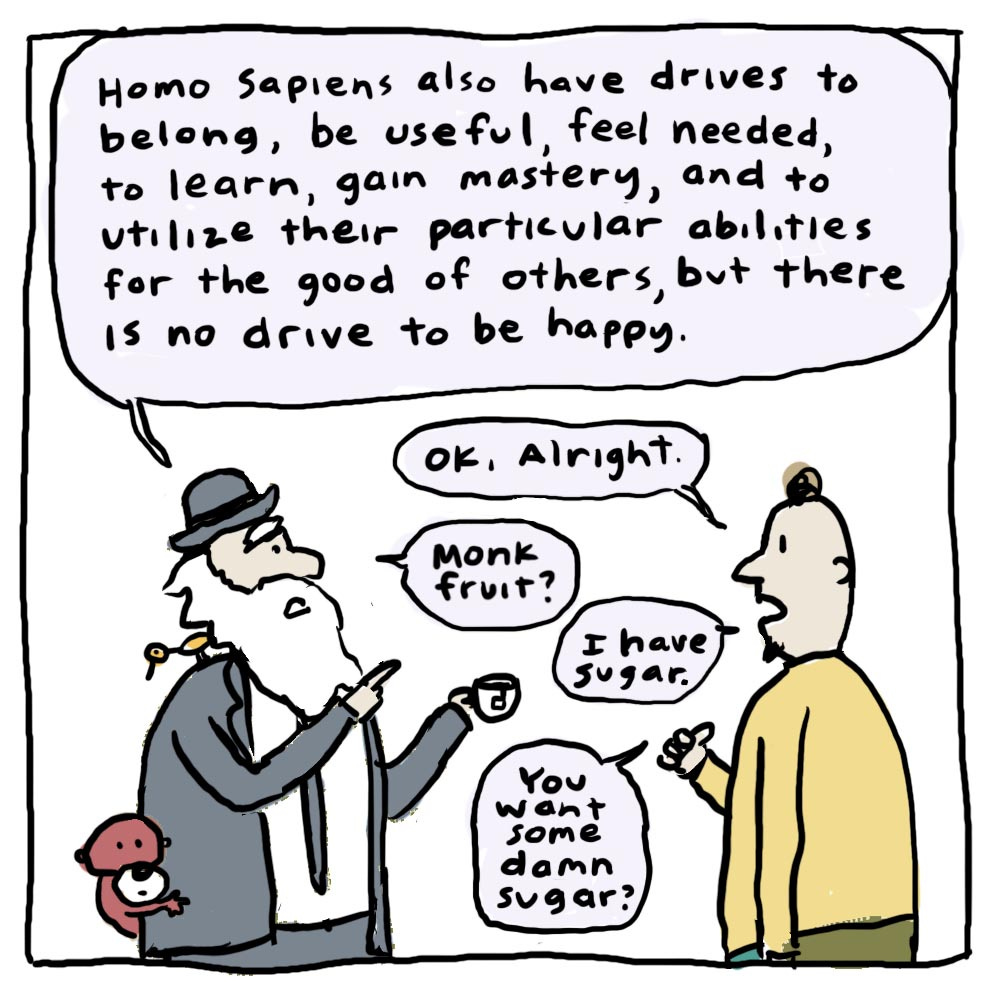
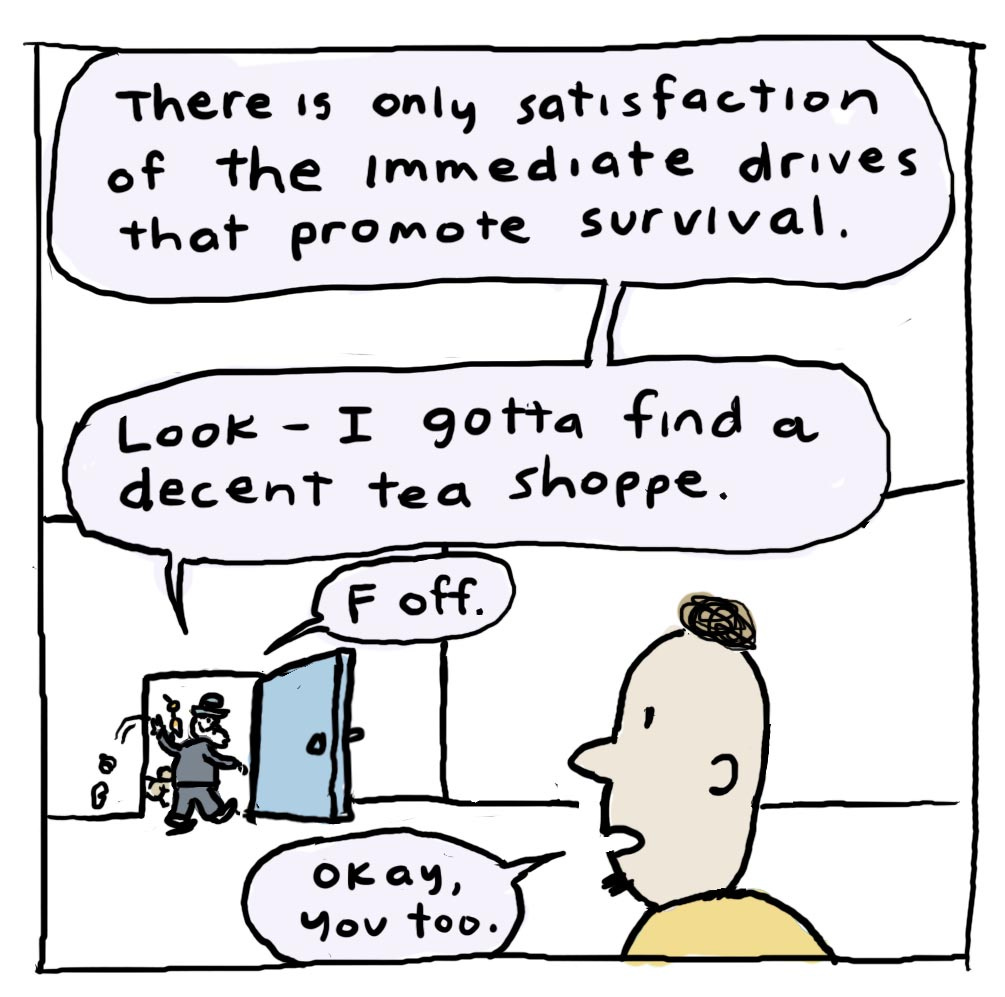
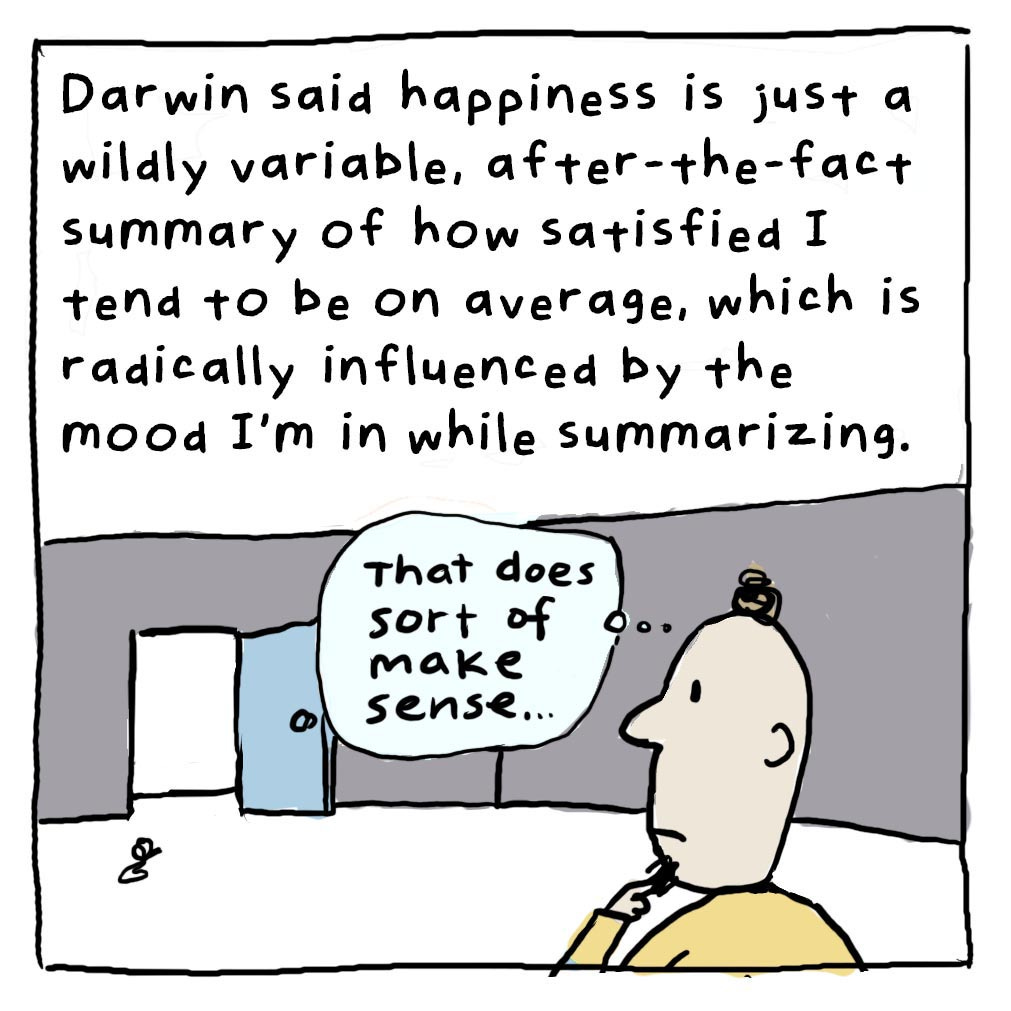
Life offers a lot of options. My gut sorts most of them out for me, but my gut isn’t always tuned in, so I’m often left to think things through.
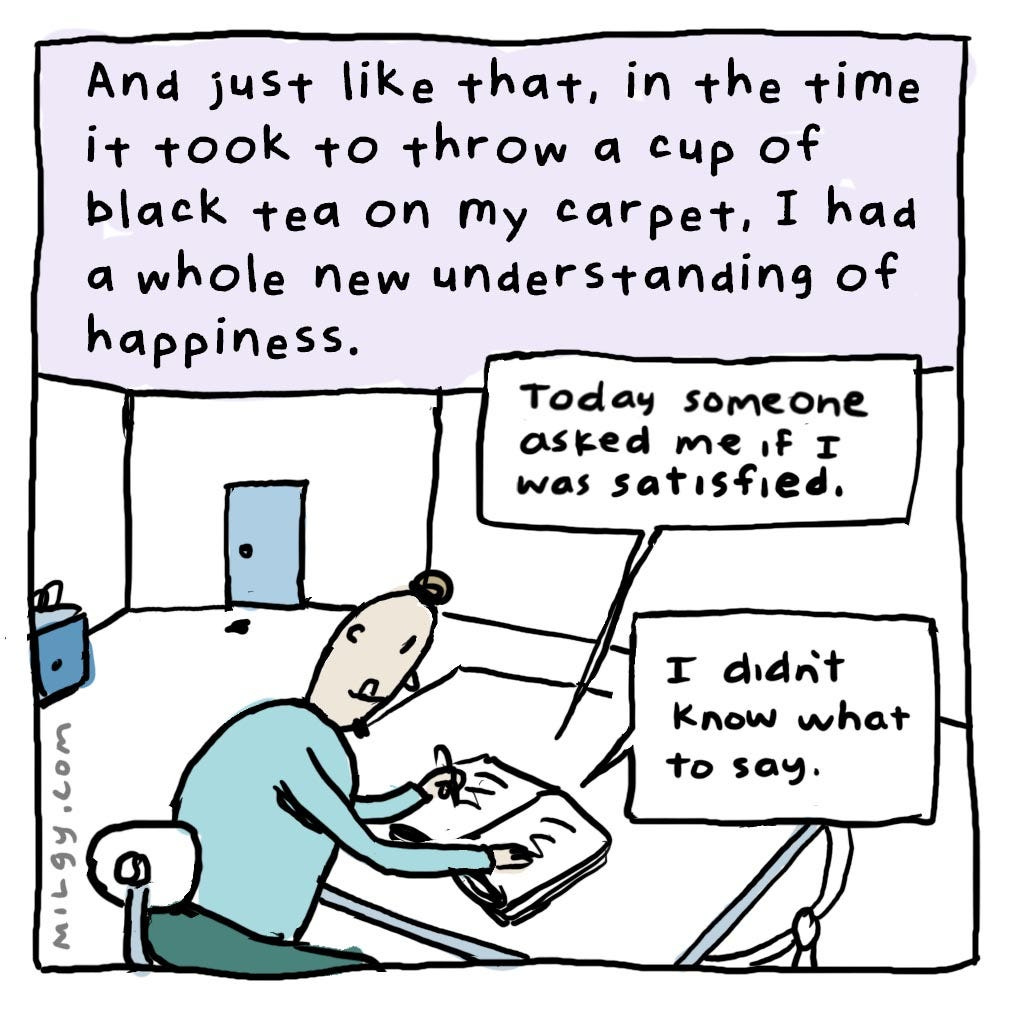
Whenever I’m deliberating, I’m ultimately trying to figure out what will eventually make me the happiest. I get that no one can be happy all the time, and wisely adjust my expectations to better accept the down parts of life’s ups and downs.
Another helpful adjustment I’ve made to my pursuit of happiness is to base it entirely on the satisfaction of my evolutionarily hardwired drives. This makes sense since the satisfaction of innate drives is the sole source of pleasure in the animal kingdom. It’s the reason that “feeling good” exists. Pleasure and pain are the neurological carrots and whips that direct us toward bounty and away from death.
It may seem to be a small, even semantic, difference between happiness and satisfaction, but it’s not. Considering our evolved drives reveals the mandatory importance of belonging and places it at the core of our humanity. It shows that status is a wholly different, lesser drive that cannot be substituted for secure inclusion. And this explains why no amount of fame, money, power, or followers can ever be enough to satisfy my need to feel needed and respected by those I need and respect. It tells me to focus on my relationships to feel important, and on work to feel useful by being of service.
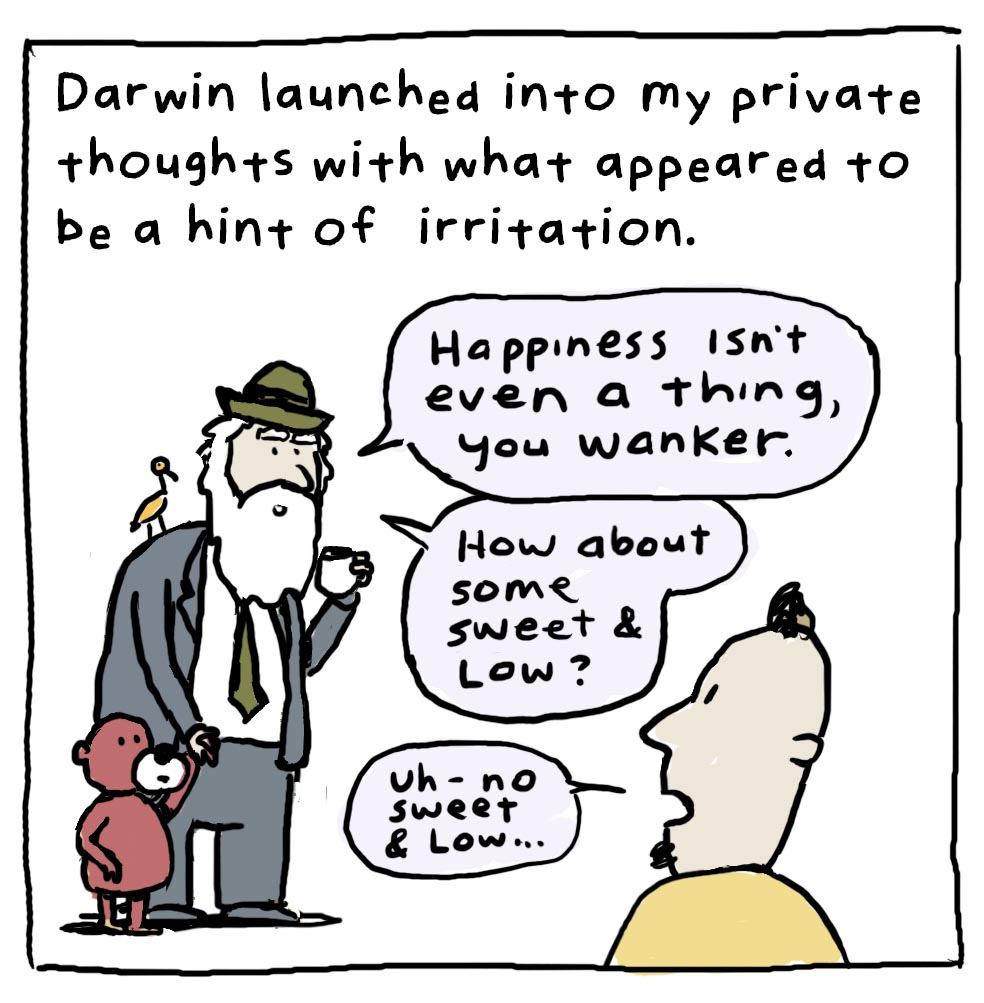
Meanwhile, happiness is a vague and amorphous concept that is easily warped by culture, ads, and electronic manipulation.
Focusing on satisfaction instead of happiness has changed my goals. Things obviously get complicated when I’m sorting through my competing drives and developmental injuries, but the indelible truth of our fundamental human needs still shines bright enough to guide my way.
David Milgrim is an award-winning, NY Times bestselling author/illustrator with over 35 children’s books. He is now an award-winning cartoonist making mental health comics and comic-essays for grown-ups. He is working on a book-length guide to using our minds to forge a satisfying life in our bat-crap crazy, modern world. Follow him and the book’s progress at www.OneComicAtATime.com.


