
networking
Mark Zuckerberg, Let Me Be Your Ghost Writer
MARK WROTE: “Facebook turns 15 next month. When I started Facebook, I wasn’t trying to build a global company. I realized you could find almost anything on the internet — music, books, information — except the thing that matters most: people. So I built a service people could use to connect and learn about each other. Over the years, billions have found this useful, and we’ve built more services that people around the world love and use every day. Recently I’ve heard many questions about our business model, so I want to explain the principles of how we operate.”
KARA TRANSLATES: We old now. We big now. It came from my one really good idea: AOL sucked and I could do better and I did. Now the noise has reached me up on Billionaire Mountain, so I am going to have to pretend that I care.
Source: Opinion | Mark Zuckerberg, Let Me Be Your Ghost Writer – The New York Times
Zuckerberg Plans to Integrate WhatsApp, Instagram and Facebook Messenger
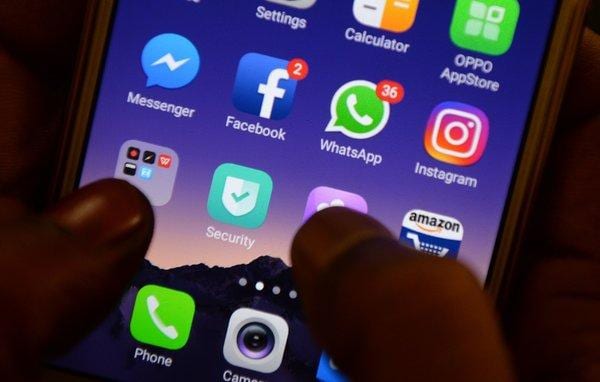
Facebook’s chief executive has asserted control over its sprawling divisions and mandated the social network’s messaging services be knitted together.
Source: Zuckerberg Plans to Integrate WhatsApp, Instagram and Facebook Messenger – The New York Times
Planned Parenthood releases sexual health chatbot Roo
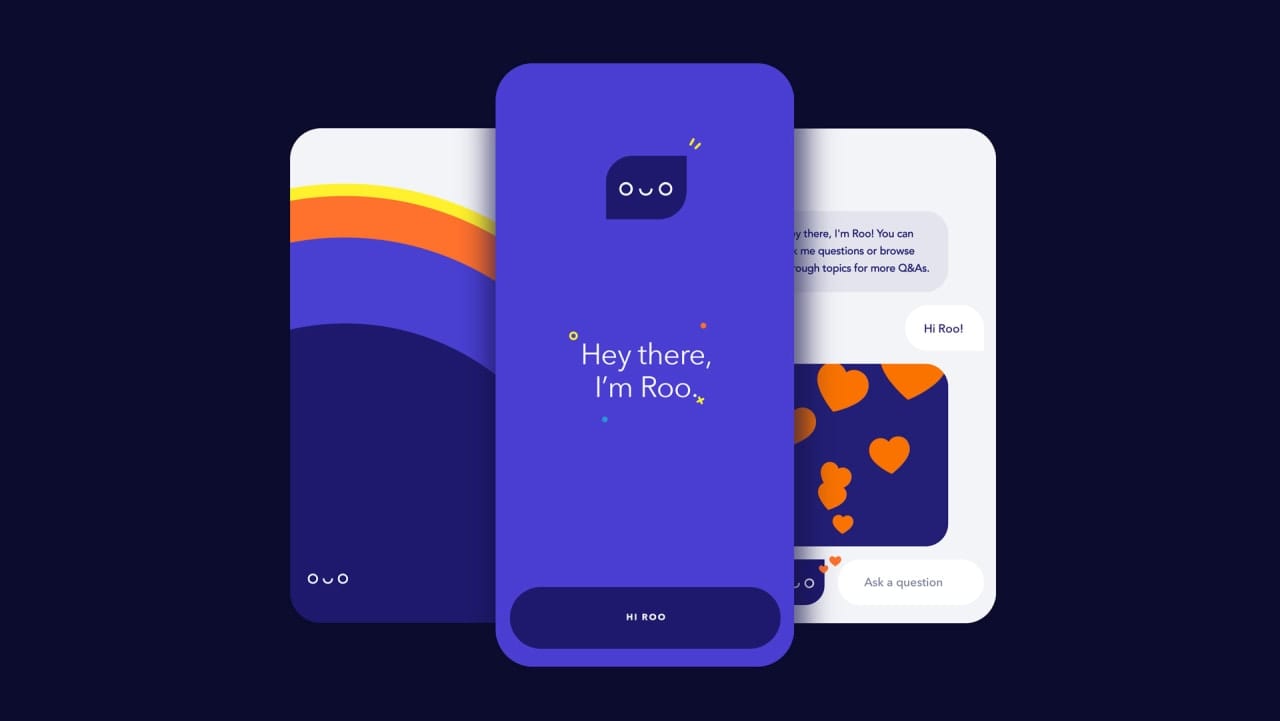
It’s designed to answer teens’ most pressing questions about sex, bodies, and relationships.
Source: Planned Parenthood releases sexual health chatbot Roo
Google’s Proposed Changes to Chrome Could Weaken Ad Blockers

Google’s proposal would render some ad blockers and other tools ineffective, forcing developers to make changes.
Source: Google’s Proposed Changes to Chrome Could Weaken Ad Blockers | WIRED
Fake news on Twitter during the 2016 U.S. presidential election

There was a proliferation of fake news during the 2016 election cycle. Grinberg et al. analyzed Twitter data by matching Twitter accounts to specific voters to determine who was exposed to fake news, who spread fake news, and how fake news interacted with factual news. Fake news accounted for nearly 6% of all news consumption, but it was heavily concentrated—only 1% of users were exposed to 80% of fake news, and 0.1% of users were responsible for sharing 80% of fake news. Interestingly, fake news was most concentrated among conservative voters.
Source: Fake news on Twitter during the 2016 U.S. presidential election | Science
Feasting on Precarity

Uber considers its drivers to be everything but employees. They are simultaneously customers of Uber’s proprietary software and private contractors providing the company a service (they also provide a service to another group of Uber’s customers, the riders). If this seems confusing, uroboric, or like a contortionist’s exercise in semantics, it is.
Thieves of Experience: How Google and Facebook Corrupted Capitalism

Silicon Valley’s Phoenix-like resurrection is a story of ingenuity and initiative. It is also a story of callousness, predation, and deceit. Harvard Business School professor emerita Shoshana Zuboff argues in her new book that the Valley’s wealth and power are predicated on an insidious, essentially pathological form of private enterprise — what she calls “surveillance capitalism.” Pioneered by Google, perfected by Facebook, and now spreading throughout the economy, surveillance capitalism uses human life as its raw material. Our everyday experiences, distilled into data, have become a privately owned business asset used to predict and mold our behavior, whether we’re shopping or socializing, working or voting.
Source: Thieves of Experience: How Google and Facebook Corrupted Capitalism – Los Angeles Review of Books
“Anything Is Possible When It Comes to Evan”: Is a Snap Sale Inevitable?
Spiegel is a complex character—even by Silicon Valley standards. He’s an aggressive boss with a surprising, often hidden morality, who can be evasive and unpredictable and overconfident. But if he wants to keep Snap independent, he’s running out of time.
Source: “Anything Is Possible When It Comes to Evan”: Is a Snap Sale Inevitable? | Vanity Fair
How Retail Changes When Algorithms Curate Everything We Buy

Giant travel search engines such as TripAdvisor, Expedia, Kayak, and Google Flights have all but replaced travel agents as most consumers’ travel advisors. Soon, independent curating engines like these could trigger the next wave of disruption in retail. The first stage of the digital shopping revolution saved consumers time and money by letting them buy things they already wanted without having to go to a traditional retail store. A major part of the second stage will likely be a dramatic refinement of technologies that tailor recommendations and then scour the internet for the best deal.
Source: How Retail Changes When Algorithms Curate Everything We Buy
The Digital Commons: Tragedy or Opportunity? A Reflection on the 50th Anniversary of Hardin’s Tragedy of the Commons
Garrett Hardin’s Science article “The Tragedy of the Commons” 50 years ago focused on a physical world where common goods are finite and rivalrous. By contrast, this paper explores the digital commons, calling for better understanding of its long-term impact and for government policies supporting benefits while mitigating costs.
Facebook culture described as ‘cult-like’, review process blamed

- More than a dozen former Facebook employees detailed how the company’s leadership and its performance review system has created a culture where any dissent is discouraged.
- Employees say Facebook’s stack ranking performance review system drives employees to push out products and features that drive user engagement without fully considering potential long-term negative impacts on user experience or privacy.
- Reliance on peer reviews creates an underlying pressure for Facebook employees to forge friendships with colleagues for the sake of career advancement.
Source: Facebook culture described as ‘cult-like’, review process blamed
Victoria’s Secret and the End of Mean Fashion Brands

For generations, fashion brands were free to set strict standards for feminine appearance. Then social media happened.
Source: Victoria’s Secret and the End of Mean Fashion Brands – The Atlantic
Clear Channel’s digital billboards help keep homeless people warm

In Stockholm, the advertising company Clear Channel owns more than 1,000 digital kiosks serving an endless loop of ads to citizens. It’s the sort of high-tech urban installation we wish might do more than just sell us things. And beginning in November of last year, Clear Channel partnered with the city to give these signs new purpose: to offer homeless people directions to the nearest shelter on particularly cold nights.
Source: Clear Channel’s digital billboards help keep homeless people warm
CES 2019 is a grand distraction from what matters

2018 was an unprecedented bad year for technology that has eroded consumer trust. But you won’t see any mention of that this week. Because it’s the annual Consumer Electronics Show (CES) in Las Vegas. It’s the time of year when gadget manufacturers everywhere line up to dazzle us with their latest takes on thin and shiny. It’s one long “This Is Fine!” cartoon, playing out in the stale cigarette-scented air of the Hilton Las Vegas–with canapés!
Privacy and security are the two things we need out of CES that we most certainly won’t get (despite Apple’s giant ad). Instead? I’ve gotten pitches for $15,000 massage chairs, delivery robots, and, as always, more TVs than I can count. It’s like the industry is telling us, kick back, binge on a show, and stuff your face until this nightmare has come to an end.
Retail predictions for 2019

Everybody, I’d like to announce that the retail apocalypse has been officially cancelled. It turns out, humans do occasionally like putting down their smartphones, leaving their sofas, and going to a real brick and mortar store to make a purchase.
Source: Retail predictions for 2019
The Post-Advertising Future of the Media

One year ago, I described the media apocalypse coming for both digital upstarts and legacy brands. Vice and BuzzFeed had slashed their revenue projections by hundreds of millions of dollars, while The New York Times had announced a steep decline in advertising.
Twelve months later, it’s end times all over again. There have been layoffs across Vox Media, Vice, and BuzzFeed (and dubious talk of an emergency merger). Mic, once valued at $100 million, fired most of its staff and sold for $5 million. Verizon took a nearly $5 billion write-down on its digital media unit, which includes AOL and Yahoo. Reuters announced plans to lay off more than 3,000 people in the next two years. The disease seems widespread, affecting venture-capital darlings and legacy brands, flattening local news while punishing international wires. Almost no one is safe, and almost everyone is for sale.
Source: The Post-Advertising Future of the Media – The Atlantic
Why online retail has to drop its addiction tactics

Clearly we’ve reached a saturation point with tech overload. Many of us have found ourselves falling into reward-center feedback loops, craving the dopamine hits that likes and comments give to the brain or the instant gratification of one-click shopping. We’re not exploring and learning anymore — we’re zombie scrolling, buying things we don’t want, and spending precious hours staring at pictures we don’t care about.
2018 Proved Game Streaming Can Still Get Bigger—and Messier
From a critical remove, then, streaming is a strangely liminal space, one not yet secure in its place in the media landscape. It’s a land of opportunity and nonsense, a media format beyond its Wild West stage yet not quite formed into something that can be subjected to mainstream media analysis. Streaming is a place for big-time, multi-million-dollar celebrities. It’s also a place where marginalized people form communities around games and people they love, where niche gaming communities like speedrunning can grow healthily.

Source: 2018 Proved Game Streaming Can Still Get Bigger—and Messier | WIRED
Why Blanding Dominates Instagram Branding

A single design studio is responsible for branding a slew of mega-successful startups like Casper and Allbirds. Here’s how it took over the world–or at least your feed.
Source: Red Antler on why blanding dominates instagram branding
22 predictions for social media in 2019

What to expect from Facebook, Twitter, YouTube, and more