
networking
Facebook announces Libra cryptocurrency: All you need to know
Facebook has finally revealed the details of its cryptocurrency, Libra, which will let you buy things or send money to people with nearly zero fees. You’ll pseudonymously buy or cash out your Libra online or at local exchange points like grocery stores, and spend it using interoperable third-party wallet apps or Facebook’s own Calibra wallet that will be built into WhatsApp, Messenger and its own app. Today Facebook released its white paper explaining Libra and its testnet for working out the kinks of its blockchain system before a public launch in the first half of 2020.
Source: TechCrunch
For Hire

When the class of 2018 graduated from college, they were the first of a new generation — Generation Z — to join the workforce. They watched their parents lose their jobs a decade earlier and fall into debt and worry about whether they’ll be able to retire. They’ve seen the rise of part-time work, the decline of well-paying entry-level jobs, and the continued shrinking of once-stable career options. Although the economy has recovered, for many graduates, financial security still feels unattainable. Here, teachers, students, job-seekers, parents, and résumé-embellishers reveal what they think it now takes to earn a living.
Source: The California Sunday Magazine
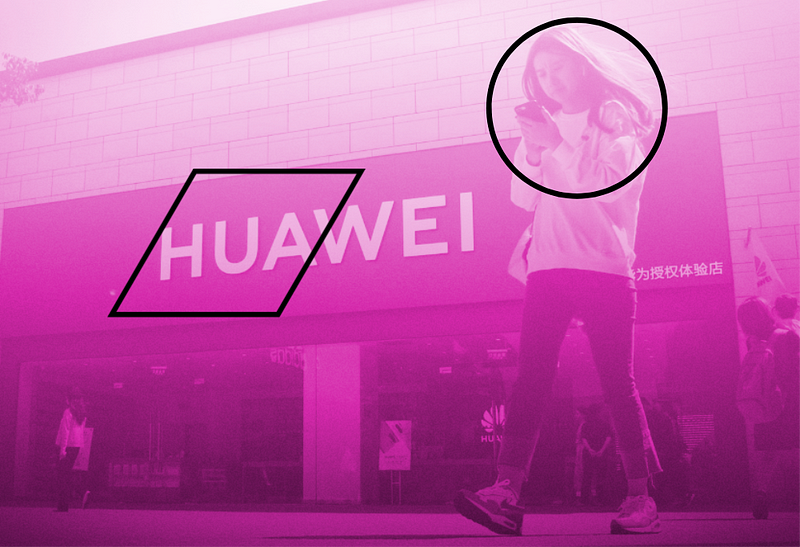
Huawei Shows the Chinese Internet will Win
The Instagram Aesthetic Is Over

Over the past year, “Instagram vs reality” photos have grown in popularity as influencers attempt to make themselves seem more accessible. Earlier this month at Beautycon, a beauty festival in New York, Instagram stars spoke about moving away from ring lights and toward showing off their faces in sunlight. As the public becomes more aware of the prevalence of sponsored posts, beauty influencers are abandoning branded shots for ones that show off their “empties” (empty bottles of product they actually use). A growing number of accounts are dedicated to calling out the various cosmetic procedures celebrities and influencers have had. Influencers have also been actively speaking out themselves about burnout, mental health, and the stress that comes with maintaining perfection.
Source – The Atlantic
Poor People’s Privacy Can’t Be an Afterthought

When someone who is living paycheck to paycheck falls victim to an online fraud or a breach, the cascade of repercussions can be devastating.
Source: Opinion | Poor People’s Privacy Can’t Be an Afterthought – The New York Times
Sri Lanka Shut Down Social Media. My First Thought Was ‘Good.’

As a tech journalist, I’m ashamed to admit it. But this is how bad the situation has gotten.
Source: Opinion | Sri Lanka Shut Down Social Media. My First Thought Was ‘Good.’ – The New York Times
As Pinterest IPOs, its coverage is often pretty sexist

Rather than treating its women-dominated audience as an advantage that has led to solid growth, much of the reporting has framed it as rather off-putting.
Source: As Pinterest IPOs, its coverage is often pretty sexist — Quartzy
Facebook stored millions of Instagram passwords unencrypted

A Facebook spokesperson pointed Recode to the update and reiterated that “there is no evidence of abuse or misuse of these passwords.” But the timing of the update — again, during the release of Mueller’s report — doesn’t convey the message that Facebook cares strongly that users are aware of this issue. Facebook is under investigation by numerous government agencies, including the FTC and the DOJ, for its data collection and privacy practices. It’s unclear if issues like unencrypted password storage could play a role in those investigations, but it’s not a good look regardless for a company that is already struggling mightily with user trust.
Source: Facebook stored millions of Instagram passwords unencrypted – Recode
As millions of dollars pour in, esports teams offer varying visions of the future

While some teams fashion themselves after traditional sports franchises, other are thinking much bigger than wins and losses, focusing on content creation and even apparel as valuations continue to spiral higher.
Snapchat Has Created the Next Evolution in Photography

The company’s Landmarkers feature seamlessly melds the real and the imagined
Source: Snapchat Has Created the Next Evolution in Photography
‘A more sophisticated influencer strategy’: Publishers are building teams to recruit ‘expert networks’

News and business publishers are hiring people to help identify and cultivate influential people that can help the publishers create and distribute content.
A new age of Instagram look-alike celebrity apps is here

350+ influencers with a collective audience of 3.5 billion people are flocking to a platform called Escapex, which gives them their own apps. It’s part of the next wave of social media focused on smaller, more private groups.
Source: A new age of Instagram look-alike celebrity apps is here
To stop copycats, Snapchat shares itself

The “Camera company” corrected course and took back control of its destiny this week at its first ever Snap Partner Summit in its hometown of Los Angeles. Now it’s a camera platform thanks to Snap Kit. Its new Story Kit will implant Snapchat Stories into other apps later this year. They can display a more traditional carousel of your friends’ Stories, or lace them into their app in a custom format. Houseparty’s Stories carousel shares what your buddies are up to outside of the group video chat app. Tinder will let you show off your Snapchat Story alongside your photos to seduce potential matches. But the camera stays inside Snapchat, with new options to share out to these App Stories.
Source: To stop copycats, Snapchat shares itself | TechCrunch
Looking for a new product? You probably searched Amazon
Google has the biggest reach of any digital property, and the majority of all US search queries start there. But product searches are switching things up as several surveys point to Amazon as the leading place to research new items.
Source: Looking for a new product? You probably searched Amazon – eMarketer Trends, Forecasts & Statistics
How Facebook Grew Too Big to Handle

The growth team, however, is unlikely to transform how Facebook fundamentally works. It won’t change the advertising business, which depends on garnering more of people’s attention than its rivals, and using data to target them. It is not dramatically changing the algorithms behind the newsfeed to prioritise in-depth thinking, abandoning the “like” button, or ceasing from sending notifications that pull people back. People You May Know still dredges users’ address books, Facebook still collects information about you as you travel around the web, and its methods to obtain European users’ consent under the new privacy rules are being challenged by privacy activists.
Source: How Facebook Grew Too Big to Handle – Above the Fold – Medium
Facebook vs. Apple is tech’s next big rivalry.

The big question after CEO Mark Zuckerberg announced Facebook’s “pivot to privacy” was whether the company was really sincere about guarding users’ personal data. (The consensus among critics: probably not as serious as you might hope.)
What does seem sincere, however, is Zuckerberg’s newfound commitment to messaging. He wants Facebook to dominate private online communication to the same degree that it dominates what we call social networking today.
Facebook Can’t Be Fixed
You cannot fix Facebook without completely gutting its advertising-driven business model. And because he is required by Wall Street to put his shareholders above all else, there’s no way in hell Zuckerberg will do that.
How is Snapchat’s Advertising Business Doing?
We lowered our Snapchat ad revenues forecast twice because of the company’s shift to selling ads programmatically, which eroded its ad prices. Since adopting automated selling, Snapchat’s CPMs fell below $10 and have stayed there, according to Digiday. Previously, Snapchat used a managed-service ad selling model, and back in 2015, it reportedly charged brands $750,000 per day to advertise on its platform.
“Self-serve programmatic buying has expanded Snapchat’s reach to more advertisers, especially small and medium-sized businesses that can invest in ads at lower bid prices. However, moving the vast majority of their ad inventory into this lower cost structure has tempered earlier growth estimates,” said Monica Peart, senior forecasting director at eMarketer.
Source: How is Snapchat’s Advertising Business Doing? – eMarketer Trends, Forecasts & Statistics
Facebook’s Video Player Isn’t Designed for You

From the outside, it’s hard to know what, exactly, Facebook wants from its video platform. For years, the company told publishers that video was the future, even as it allegedly goosed statistics behind the scenes to make the format look more important than it was. In 2017, the social network rolled out a major update to its video player that added a kind of picture-in-picture mode to the News Feed, among other changes, in an effort to make “watching video on Facebook richer, more engaging and more flexible,” according to the company. Then last year, Mark Zuckerberg announced the company would de-prioritize video from brands in favor of content that “encourage[s] meaningful interactions.”
Source: Facebook’s Video Player Isn’t Designed for You – OneZero
Why Instagram Made Multi-Photo Posts More Annoying

Multi-photo posts will now often start on the second image in a series. These “photo nudges,” as I call them, seem to occur when you scroll past an image without engaging with it. Instagram’s algorithm, growing smarter every day through the data users create, reinserts these series into your feed disguised as something new by “nudging” the second image forward. Whenever this happens, Instagram’s watching eye suddenly becomes a visible presence in my experience, and an annoying one at that.
Source: Why Instagram Made Multi-Photo Posts More Annoying – OneZero