
networking
How Dark Patterns Online Manipulate Shoppers
.
Dark patterns are the often unseen web-design choices that trick users into handing over more time, money, or attention than they realize. A team of Princeton researchers is cataloging these deceptive techniques, using data pulled from 11,000 shopping sites, to identify 15 ways sites subtly game our cognition to control us. The research builds on the work of Harry Brignull, a London-based cognitive scientist who coined the term dark pattern in 2010, and the authors Richard Thaler and Cass Sunstein, whose work on “nudges” explores how default options influence behavior. Just over one in 10 websites contain at least one type of dark pattern, the Princeton research finds. The more popular the site, the more likely it has at least one.
Source: The Atlantic
The techlash has come to Stanford

The dream of starting a company in your dorm room to solve the world’s problems and make billions in the process is still thriving on campus. But a competing dream, perhaps just as old, appears to be growing in fervor now, too: to use technical skills as an insurance policy against dystopia. Students have not failed to notice the unflattering headlines that have dogged Silicon Valley over the past several years—the seemingly unending scandals in which the biggest technology companies in the world have mishandled user data, facilitated the spread of misinformation, and sold software to the agencies enforcing the Trump administration’s harsh immigration agenda. All of this has sparked new conversations inside and outside the classroom, and there are signs that the once-reliable pipeline between Stanford and Silicon Valley is narrowing—at least a tiny bit.
Source: Slate
Why Aren’t We Talking About LinkedIn?

Considering its size and social footprint, LinkedIn has been a notably minor character in major narratives about the hazards of social media. The site hasn’t proved especially useful for mainstreaming disinformation, for example, nor is it an obvious staging ground for organized harassment campaigns. It is unique among its social media peers in that it has not spent the last five years in a state of wrenching crisis. And perhaps even more importantly, LinkedIn is not, in the popular imagination, a force for radicalization, a threat to democracy, a haven for predators, an environment that encourages mob behavior, or even a meeting place for pot stirrers.
Source: The New York Times
Netflix’s The Great Hack Brings Our Data Nightmare to Life
As a primer on the scandal, which dominated headlines around the world for two years after the election of President Donald Trump, the film is both succinct and thorough. It begins as news is breaking that Cambridge Analytica unethically scraped data from millions of Facebook users and used it to target vulnerable and impressionable voters in an effort to elect Trump and pass the Brexit resolution. Then it tracks the fallout. The film is bookended by professor David Carroll’s quest to get his own data back from Cambridge Analytica—a story WIRED told in depth—but focuses mainly on former CA employee Brittany Kaiser and her abrupt and somewhat baffling decision to turn against her employer.
Source: Wired
How TikTok Is Rewriting the World
TikTok can feel, to an American audience, a bit like a greatest hits compilation, featuring only the most engaging elements and experiences of its predecessors. This is true, to a point. But TikTok — known as Douyin in China, where its parent company is based — must also be understood as one of the most popular of many short-video-sharing apps in that country. This is a landscape that evolved both alongside and at arm’s length from the American tech industry — Instagram, for example, is banned in China.
Under the hood, TikTok is a fundamentally different app than American users have used before. It may look and feel like its friend-feed-centric peers, and you can follow and be followed; of course there are hugely popular “stars,” many cultivated by the company itself. There’s messaging. Users can and do use it like any other social app. But the various aesthetic and functional similarities to Vine or Snapchat or Instagram belie a core difference: TikTok is more machine than man. In this way, it’s from the future — or at least a future. And it has some messages for us.
Inside the luxury industry’s fight for millennials’ wallets
Louis Vuitton, Gucci, and Hermès are battling for young consumers. Will their strategies—which include everything from podcasts to video games—pay off?
Source: Fast Company
Face It — You Want To Be Seen

As Taina Bucher explores in her book, If… Then: Algorithmic Power and Politics, we are generally in the dark when it comes to explaining the specific mechanics of the algorithms at the heart of our favorite apps, but what we do regularly guess at is how to make them notice us. As Bucher discovered in conversation with social media users, people tweak the content of their posts on Facebook, or even the time of day they post, in an attempt to catch the algorithm’s eye and ride the wave of its amplification. This is familiar to anyone who’s used social media, and it’s why news organizations repost old content when a topic is trending on Twitter, or why you see a million hashtags at the end of Instagram posts. Everyone is just trying to get noticed.
Source: OneZero
Most of the Google Walkout Organizers Have Left the Company

Four of the seven Google employees who organized a 20,000-person walkout in November have resigned from the company, including two women who claimed Google retaliated against them for their internal activism. The latest to leave is Meredith Whittaker, who ran Google Open Research and has emerged in the past couple of years as a prominent voice demanding increased accountability from tech companies around uses of artificial intelligence.
Source: Wired
On TikTok, Teens Meme Life360, the Safety App Ruining Their Summer
Spend enough time on the social media app TikTok, and you’re bound to see a Life360 meme. That’s because Life360, a location-sharing app aimed at families, is apparently ruining the lives of teenagers all across the United States. The service allows parents to track their kids’ whereabouts in real time, among other features. As one girl with long, blond hair jokes in a popular TikTok clip, it’s set her summer vacation on fire. Some of the videos have racked up hundreds of thousands of likes—in other words, they’re relatable.
Source: Wired
What if Being a YouTube Celebrity Is Actually Backbreaking Work?
Emma Chamberlain dropped out of school and changed the world of online video. Chamberlain invented the way people talk on YouTube now, particularly the way they communicate authenticity. Her editing tricks and her mannerisms are ubiquitous. There is an entire subgenre of videos that mimic her style, and a host of YouTubers who talk, or edit, just like her. The Atlantic recently noted this and declared she is “the most important YouTuber” working today.
Chamberlain edits each video she makes for between 20 and 30 hours, often at stretches of 10 or 15 hours at a time. Her goal is to be funny, to keep people watching. It’s as if the comic value of each video is inversely proportional to how little humor she experiences while making it. During her marathon editing sessions, she said, she laughs for “maybe, maybe 10 seconds max.”
Source: New York Times
Now Some Families Are Hiring Coaches to Help Them Raise Phone-Free Children
Parents around the country, alarmed by the steady patter of studies around screen time, are trying to turn back time to the era before smartphones. But it’s not easy to remember what exactly things were like before smartphones. So they’re hiring professionals. A new screen-free parenting coach economy has sprung up to serve the demand. Screen consultants come into homes, schools, churches and synagogues to remind parents how people parented before.
Source: New York Times
Millennials Are Increasingly Skeptical of Businesses Motives and Impact On Society
The relationship between younger generations and businesses goes deeper than general disdain and distrust. Millennials said they start and stop relationships with companies based on the companies’ positive or negative impacts on society. For example, 42% of respondents said they have started/deepened business relationships if they perceive the company has products that positively impact the environment/society. And 38% said they stopped/lessened those relationships if a business has products/services that negatively impact the environment/society. Similarly, 36% have said that they started/deepened a relationship because of a company’s ethical behavior, and 37% said they would stop/lessen because of its ethical behavior.
Source: eMarketer
Welcome to the K-12 Surveillance State

Arguably more troubling than the collection of student data is where that data is stored and who has access to it. As Education Week reported in May, Florida lawmakers are planning to introduce a statewide database “that would combine individuals’ educational, criminal-justice and social-service records with their social media data, then share it all with law enforcement.” Such a database is likely to reveal sensitive information like which students were bullied or harassed, because of a protected characteristic like their sexual orientation, according to Amelia Vance, who directs the Education Privacy Project. All this information, once compiled, could be exposed through data breaches , sent to child data brokers or misclassified, which could lead to outing students or wrongly identifying innocent students as threats.
Source: The New York Times
Why AI can’t fix content moderation
Content moderation is a long-standing challenge for big tech companies. Many of the issues surrounding content moderation have been reported on extensively by The Verge, and they’re now the focus of UCLA professor Sarah T. Roberts’ new book Behind the Screen: Content Moderation in the Shadows of Social Media.
Source: The Verge
Next Up on Your Twitch Stream: Chess?

Chess.com is courting a wider audience by turning chess into a poker-like spectator sport. In 2017, Chess.com took over the United States Chess League, the only nationwide chess league in the country at the time. It was renamed the Professional Rapid Online Chess League (PRO Chess League) and started accepting teams and players representing cities from around the world. In its inaugural season, the league drew in 48 teams, each with 8–16 players. There were so many people ready to compete that the league had to be cut down to 32 teams the year after. As the league commissioner Greg Shahade put it, that many players was “a bit too large and chaotic.”
Source: OneZero
Facebook’s libra has staggering potential – state control of money could end
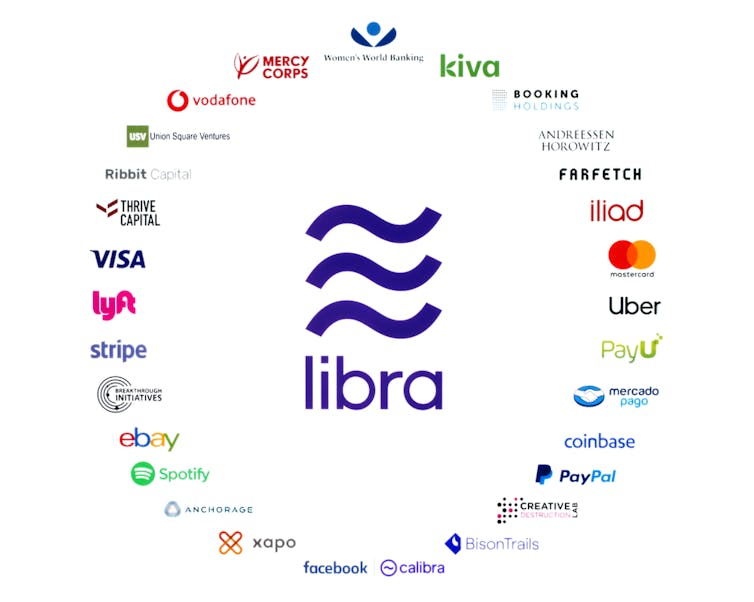
The UN recognises 180 currencies worldwide as legal tender, all of them issued by nation states. It does not recognise cryptocurrencies like bitcoin in this way, even if communities of enthusiasts have been treating them as a means of exchange for over a decade now. Yet the latest addition to this group, Facebook’s libra, threatens to do something that no other cryptocurrencies have come close to achieving: the state monopoly over the control and issuance of money is now under serious threat. Facebook boasts over half the world population as active monthly users: 2.2 billion on Facebook, 0.8 billion on Instagram and 0.7 billion on WhatsApp. Combined with the fact that 1.7 billion adults worldwide have no bank accounts, a project like this is the perfect petri dish in which to create a truly global currency.
Source: The Conversation
How the people who built Slack use it without going bonkers
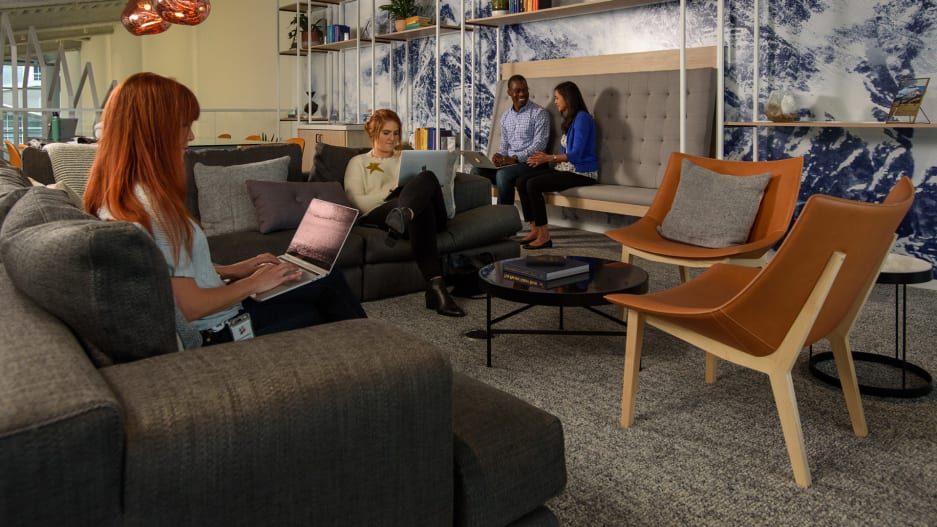
If there’s one technology that embodies the unreasonable demands of the always-on work culture that pervades so many companies today, it’s Slack. The group-chat app can make users feel tethered to their devices, often at the expense of doing more important tasks. Over 10 million people log on to Slack every day. Slack’s own employees, of course, use Slack—they use it a lot. And if distraction is caused by technology, then they should surely suffer the consequences. Surprisingly, according to media reports and Slack employees I spoke with, the company doesn’t have that problem.
Source: Fast Company
In Stores, Secret Bluetooth Surveillance Tracks Your Every Move

Imagine you are shopping in your favorite grocery store. As you approach the dairy aisle, you are sent a push notification in your phone: “10 percent off your favorite yogurt! Click here to redeem your coupon.” You considered buying yogurt on your last trip to the store, but you decided against it. How did your phone know? Your smartphone was tracking you. The grocery store got your location data and paid a shadowy group of marketers to use that information to target you with ads. Recent reports have noted how companies use data gathered from cell towers, ambient Wi-Fi, and GPS. But the location data industry has a much more precise, and unobtrusive, tool: Bluetooth beacons.
Source: The New York Times
How Tech Redefined the Experience of Culture

Video games and social media require human users to enter into a procedural loop known as flow
While there are no universals in media culture today, there are many qualities worth exploring, because they are shared by many communities or because they are compelling remediations of the age of modernism. One of these is procedurality. Popular modernist writers today claim that this is the essence of the computer: its procedures (algorithms, programs) allow it to interact with other machines and human users in increasingly complex and creative ways. Video games and social media are procedural: they require human users to enter into a procedural loop that both constrains and empowers them. Procedurality is itself the latest version of mechanization, which has been a key condition of society and the economy since the Industrial Revolution. While modernism was vitally concerned with the cultural meaning of mechanical and power technologies in the 20th century, today’s media culture is exploring how far procedurality and simulation can penetrate into and redefine creative expression as well as our politics and everyday lives.
Source: Medium, OneZero
Facebook moderators break their NDAs to expose desperate working conditions

At Facebook’s worst-performing content moderation site in North America, one contractor has died, and others say they fear for their lives
Source: The Verge